
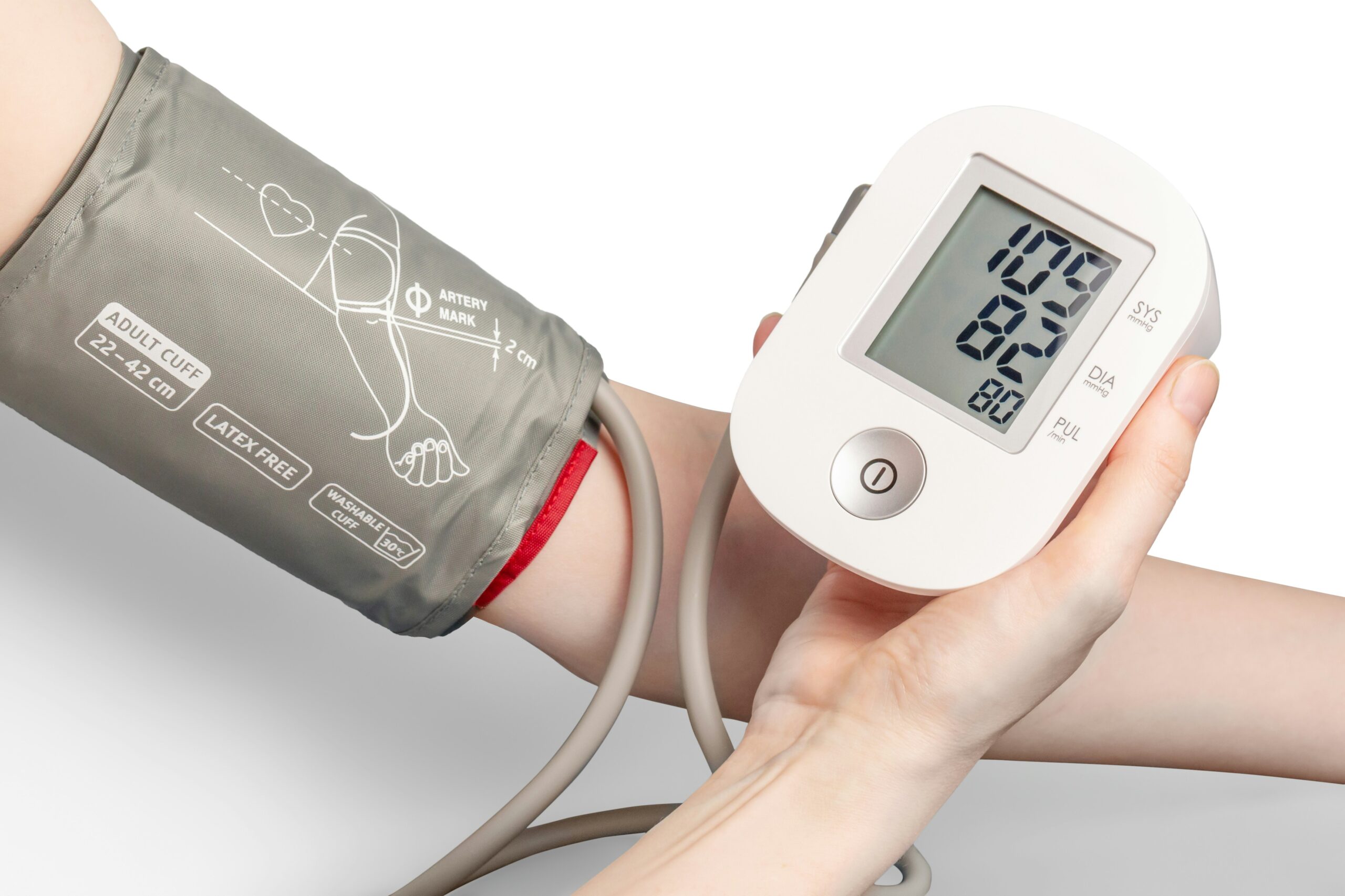
People living with severe mental ill health are more likely to develop preventable physical health conditions than those without severe mental ill health. This means that people experiencing severe mental ill health (SMI) are more likely to die early i.e. before the age of 75 (Hayes, 2017). This unacceptable health inequality needs to change.
One way of reducing this mortality gap is to ensure that all people living with severe mental ill health receive an annual physical health check. Despite this, in the third quarter of 2023-2024, only 55% of people with severe mental ill health in England received an annual health check (Office for Health Improvement and Disparities 2023). The reasons behind these low numbers are well known e.g. difficulty navigating health systems (Fusar-Poli 2022), stigma (Gronholm 2017), and fragmented health services (Kaufman 2012). However, knowing what is causing the problem and knowing how fix it are two different things.
A recent systematic review explored explore what, if any, interventions are effective at increasing the number of people with SMI who receive an annual physical health check (Emsley et al, 2026).
Methods
In this systematic review the authors searched for studies that compared an intervention aimed at increasing the number of people who had a physical health check with a control or comparator. To align the review with who is eligible for a physical health check in the UK, the inclusion criteria was limited to studies that included people with bipolar affective disorder, schizophrenia and other psychoses. Only studies from high income countries were included as the intention of this review was to make future practice recommendations with a UK focus. Three databases were searched from 2000 until October 2024. The database search terms were informed by published reviews, reference lists were also searched.
Data was extracted from the included studies and a Synthesis Without Meta-analysis (SWiM) was conducted due to the heterogeneity between the included studies and an effect direction plot was used to depict an overall positive or benefit effect for each study. Risk of bias was assessed using the Rob-2 for randomised controlled trials, and ROBINS-E and ROBINS-I for non-randomised controlled trials.
Results
The authors identified 4437 studies in total. After screening 112 full-texts, 12 studies were eligible for inclusion. Eight of the studies were conducted in the UK, three in the USA and one in Japan. The sample size of the included studies ranged from 172 to 2,079,306. All of the studies had a high risk of bias, apart from one that had a moderate risk of bias, the main reason for bias was due to bias arising from the randomisation process.
The studies explored a range of intervention types, five explored a service change, three explored financial incentivisation, two explored case management, one was a mixed intervention and one involved sending an invitation letter with a follow up phone call. The service change interventions were heterogenous and involved different types of change e.g. one study looked at promotion of physical health screening and another involved a computerised cardiovascular screening template. The other three service change interventions explored ways to integrate care.
Data was extracted on who the intervention was aimed at; four of the studies were targeted at the service user, seven targeted the health professional, three targeted the organisation, one targeted all three, two targeted both the service user and the health care professional and four targeted the health professional and the organisation.
The outcomes reported were varied, three studies reported receipt of a physical health check, one reported a ‘data rich’ physical health check, three reported receipt of cardio-vascular risk screening, two studies reported alcohol consumption, one measured change in use of primary care or outpatient services and one reported receipt of cancer screening.
The diversity of intervention type and outcome assessed meant that it was not possible to synthesise the data in a meta-analysis. Instead the authors assessed the direction of the effect of each study intervention and classed it as either positive, negative or no clear/ mixed effects. Both the case management studies were found to have a positive effect. The service change interventions had mixed results, two had a positive effect and three had no effect or a mixed effect, two of the financial incentivisation studies had a positive effect and one had a mixed or no effect. The mixed intervention had a mixed/ no effect.

Conclusions
The results indicate that different interventions to encourage health screening are likely to have different effectiveness. Case management appears to be the most promising intervention, however the service change interventions were too different to draw conclusions about the effectiveness of service change interventions as a whole.

Strengths and limitations
The strengths of this study are; it was not solely limited to randomised controlled trials. It included any study that compared an intervention to promote uptake of physical health checks with a control or comparator. This allowed a broad range of evidence to be included. In addition, all types of intervention to promote uptake of physical health checks were included rather than limiting it to a single type of intervention e.g. financial incentive. This allows the authors to draw conclusions on interventions to increase physical activity checks as a whole rather than for a single type intervention. Although the review was limited to studies that had been conducted in high income countries, as the purpose of the review is to inform UK policy this is appropriate. Finally the analysis of the data was conducted according to SWiM guidelines which gives reassurance about how the data was synthesised.
The study does however have some limitations that need to be considered. Due to the heterogeneity of the outcomes collected and the types of interventions included it was not possible to draw firm conclusions about which interventions were effective as the studies were insufficiently similar to be able to combine the results in a meta-analysis. Another limitation is the low quality of the included studies with most being at high risk of bias. Finally, some studies used a proxy to determine whether an annual health check had been completed, whereas others were able to use a binary measure i.e. had a health check been completed, yes or no. This weakens the study findings and makes it difficult to synthesise the results.

Implications for practice
This systematic review highlights the need to conduct more high-quality research on this topic. Physical health checks for people with SMI are endorsed in UK policy (CORE20PLUS5) and the NHS Long Term Plan (NHS England, 2019) and identifying effective ways to increase uptake of physical health checks aligns with this UK policy.
The importance of SMI registers in Primary Care is endorsed by National Institute for Health and Care Excellence guidance and financial incentivisation of GP surgeries. For instance, QoF payments are a promising way of increasing uptake of physical health checks. However recent cuts to QoF payments to General Practice surgeries in England are not aligned with this finding.
Case-management is another promising approach, however the research in this review was not conducted in General Practices so it is not known how well this approach works in general practice settings. Further work is needed to explore a care-management approach in primary care and how General Practices can collaborate with other health services to improve physical health care for people with SMI.
In summary, people with SMI die earlier than those without and ensuring people with SMI receive a physical health check is one way to reduce this unacceptable health inequality. These findings align with a previous Mental Elf blog (Peckham, 2020) on the importance of increasing access and uptake of cancer screening for people with SMI.

Statement of interests
Emily Peckham has none to declare.
Editor
Edited by Laura Hemming.
Links
Primary paper
Elizabeth Emsley, Sarah A Sullivan, Elizabeth Rose-Innes, Emma Sidebotham, Clare French (2026). Increasing uptake of physical health checks for people living with severe mental illness: a systematic review. British Journal of General Practice, 76(762).
Other references
Fusar-Poli P, Estradé A, Stanghellini G, et al. (2022) The lived experience of psychosis: a bottom-up review co-written by experts by experience and academics. World Psychiatry 21(2):168–188, doi:10.1002/wps.20959, pmid:35524616.CrossRefPubMedGoogle Scholar
Gronholm PC, Thornicroft G, Laurens KR, Evans-Lacko S (2017) Mental health-related stigma and pathways to care for people at risk of psychotic disorders or experiencing first-episode psychosis: a systematic review. Psychol Med 47(11):1867–1879, doi:10.1017/S0033291717000344, pmid:28196549.
Hayes JF, Marston L, Walters K, King MB, Osborn DPJ. Mortality gap for people with bipolar disorder and schizophrenia: UK-based cohort study 2000-2014. Br J Psychiatry. 2017;211(3). doi:10.1192/bjp.bp.117.202606
Kaufman EA, McDonell MG, Cristofalo MA, Ries RK (2012) Exploring barriers to primary care for patients with severe mental illness: frontline patient and provider accounts. Issues Ment Health Nurs 33(3):172–180, doi:10.3109/01612840.2011.638415, pmid:22364429.CrossRefPubMedGoogle Scholar
NHS England (2024) Improving the physical health of people living with severe mental illness: guidance for integrated care systems (NHS England), accessed 26 June 2026.
NHS England (2019) NHS mental health implementation plan 2019/20–2023/24. accessed 26 June 2026.
Office for Health Improvement and Disparities (2023) Research and analysis: premature mortality in adults with severe mental illness (SMI) (Office for Health Improvement and Disparities), accessed 26 June 2026.
Peckham, E. Cancer Screening Disparities in people with mental illness. Mental Elf Blog 20th Jan 2020.